
By Emkionyx Team ·
Why Do Fire Alarm Systems Give False Alarms? Causes, Prevention and Solutions
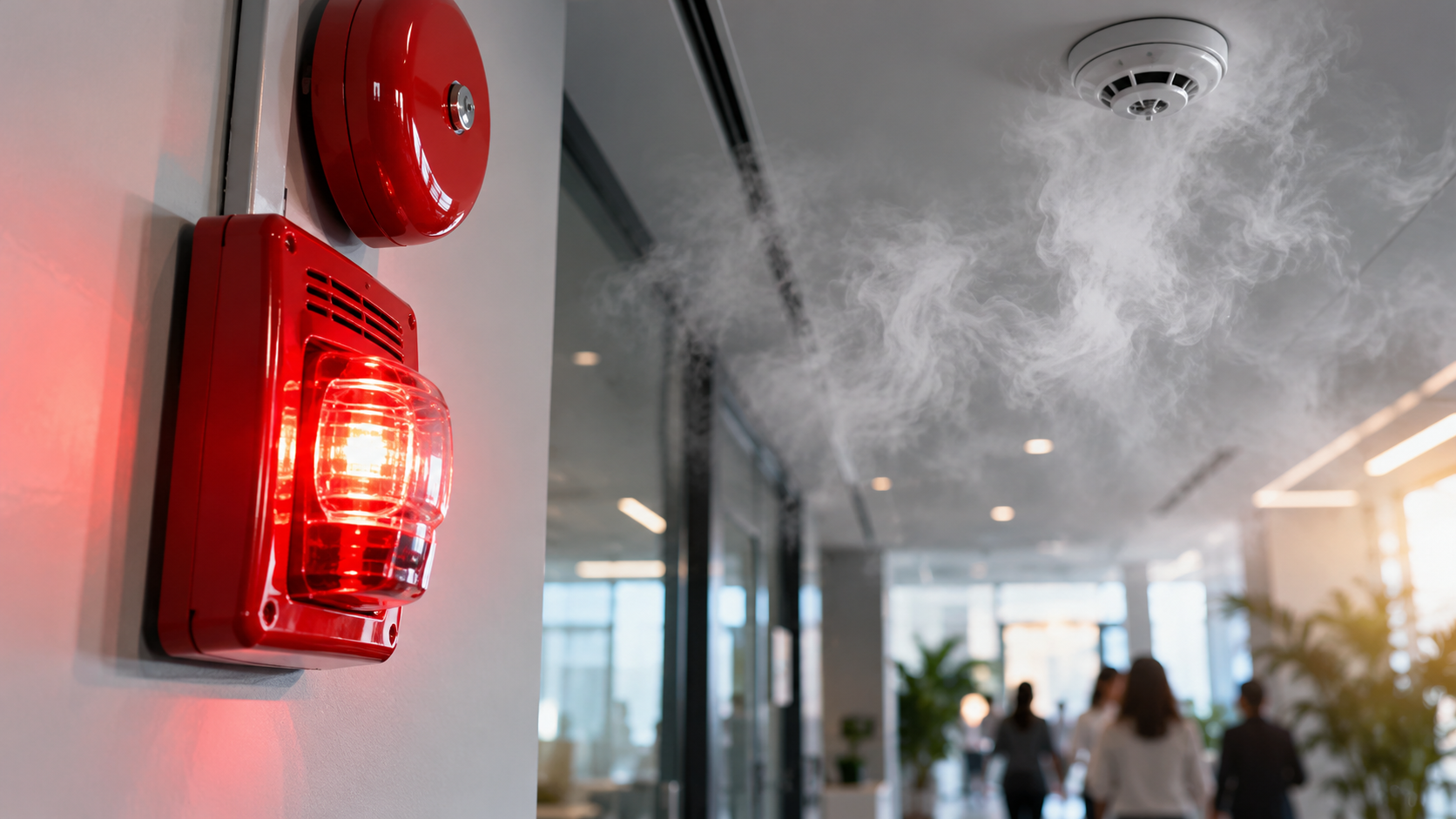
A fire alarm activates in a commercial building. Occupants begin evacuating, facility managers investigate the affected area, and emergency procedures are initiated. After checking the premises, however, there is no sign of a fire. While one such incident may appear harmless, repeated false fire alarms can become a serious operational problem, particularly in large commercial buildings, hospitals, hotels, warehouses and industrial facilities.
False alarms interrupt business operations, create unnecessary evacuations, increase maintenance costs and gradually reduce occupants' confidence in fire protection systems. When people repeatedly experience alarms without an actual emergency, they may become less responsive to future warnings. This is particularly concerning because a genuine fire alarm must always receive an immediate response.
But why do fire alarm systems activate when there is no fire? The problem is not necessarily a defective detector. Steam, dust, cooking fumes, aerosol sprays, incorrect detector placement, electrical faults and inadequate maintenance can all contribute to unwanted activations.
Understanding these causes is essential to maintaining a reliable fire detection system. This article explores the common reasons behind false fire alarms, how to identify their underlying causes and how better detection technology, maintenance practices and building management can help prevent recurring incidents.
6 Common Reasons Why Fire Alarm Systems Give False Alarms
A fire alarm system consists of interconnected detectors, manual call points, control panels, notification appliances and communication equipment. An unwanted activation can originate from the detector itself, the surrounding environment or a problem elsewhere in the system. In commercial buildings, several factors may also occur together, making it important to investigate recurring alarms rather than repeatedly resetting the control panel.
1. Dust and Contamination Inside Smoke Detectors
Dust accumulation is a common environmental cause of unwanted smoke detector activations. Commercial and industrial buildings are continuously exposed to airborne particles from construction work, manufacturing processes, cleaning activities and everyday occupancy. Over time, these particles can enter detector chambers and accumulate around sensitive components.
Optical smoke detectors use light-scattering technology to identify airborne particles associated with smoke. When dust, dirt or small insects accumulate inside the sensing chamber, they can interfere with the optical sensing mechanism and contribute to unwanted activations. This is particularly relevant in warehouses, workshops, manufacturing facilities and buildings undergoing renovation.
Preventing these incidents requires appropriate detector maintenance and environmental management. Building managers should establish inspection and cleaning schedules based on manufacturer instructions, maintain suitable housekeeping practices and review detector suitability in areas exposed to high concentrations of airborne particles.
2. Steam, Cooking Fumes and Other Environmental Interference
Steam and cooking fumes are among the common reasons smoke detectors activate without an actual fire. Moisture particles from showers, bathrooms and industrial processes can enter detector chambers, while smoke and airborne particles from cooking appliances may produce similar unwanted responses.
This problem frequently occurs in hotels, hospitals, office buildings and commercial kitchens where detectors may be exposed to steam, burnt food, overheated oils or inadequate ventilation. A detector positioned near a bathroom entrance, for example, may repeatedly encounter steam when occupants open the door after using a shower. Similarly, cooking fumes can spread into adjacent corridors if kitchen extraction systems are ineffective.
Aerosol sprays, deodorants, insecticides and cleaning chemicals can also introduce fine particles into the surrounding air. Depending on the detector technology and the concentration of these substances, they may contribute to unwanted activations.
To reduce these incidents, building managers should:
- Review detector locations near bathrooms, kitchens and steam-generating equipment.
- Maintain adequate ventilation and kitchen extraction systems.
- Avoid directing aerosol sprays or cleaning products towards detectors.
- Review cleaning procedures in areas experiencing repeated activations.
- Ensure the selected detection technology is appropriate for the environment.
The objective is not to make detectors less sensitive or disable them, but to ensure that the detection arrangement is suitable for the conditions in which it operates.
3. Incorrect Detector Placement and Airflow Conditions
A smoke detector can function correctly and still be unsuitable for its installation location. Detector placement is an important part of fire alarm system design because smoke movement depends on ceiling geometry, room layout, temperature differences and ventilation conditions.
For example, installing a detector too close to an HVAC supply diffuser may expose it to strong airflow that affects how smoke and other airborne particles reach its sensing chamber. Detectors positioned near exhaust outlets, kitchens, bathrooms or industrial processes may also experience repeated unwanted activations.
Changes to a building can create additional problems. Renovations, new partitions, suspended ceilings and modifications to ventilation systems may affect the original detection coverage and airflow patterns.
Detector placement should therefore account for the characteristics of the protected space, the intended use of the area, the selected detection technology and applicable installation requirements. When repeated alarms occur in the same location, a competent fire alarm professional should review the detector's position and suitability before recommending changes.
4. Equipment Faults and Electrical Problems
Not all unwanted fire alarm activations are caused by environmental conditions. Damaged detectors, deteriorating components, loose connections, wiring problems and faulty control modules can also affect system performance.
A detector may become unreliable due to ageing, contamination or physical damage. In addressable systems, communication between field devices and the control panel is also important. Abnormal device conditions or communication problems may generate fault indications that require technical investigation.
Recurring alarms from the same device or circuit should be examined alongside the control panel's event history and maintenance records. Simply replacing a detector without identifying the underlying problem may only provide a temporary solution.
Regular inspection and testing can help identify developing issues. Maintenance personnel should examine detector condition, mounting, connections, cables and associated modules where appropriate, and replace defective components with compatible, approved equipment.
5. Construction, Renovation and Maintenance Activities
Construction and maintenance work can introduce dust, smoke, heat and other airborne particles that interfere with fire detection. Drilling, cutting, sanding, welding and grinding are particularly relevant because these activities may release materials that reach nearby detectors.
This is a common challenge in commercial buildings where renovation work takes place while normal business operations continue. Contractors working above suspended ceilings may also disturb accumulated dust, allowing particles to spread into occupied areas.
Building managers should coordinate construction and maintenance activities with the fire safety team. Contractor induction, hot-work permits and advance communication about dust-generating activities can help reduce unwanted activations.
If temporary detector isolation or protection is unavoidable, it must be authorised, documented and managed through approved procedures, with appropriate compensatory fire safety measures. Required fire protection must be restored promptly after the work is completed.
6. Environmental Changes and Inadequate Maintenance
Temperature fluctuations, high humidity, water ingress and other environmental conditions can affect certain types of detection equipment. Building modifications may also introduce new sources of dust, moisture or heat that were not present when the fire alarm system was originally designed.
Inadequate maintenance makes these problems more difficult to identify. Detectors that are not inspected, tested and maintained according to the required schedule may become contaminated, damaged or less reliable over time.
Building managers should follow the inspection, testing and maintenance requirements applicable to their installation, equipment specifications and local regulations. Keeping records of unwanted activations, repairs, detector cleaning and equipment replacement also helps identify recurring issues.
How to Identify the Actual Cause of a False Fire Alarm
When a fire alarm activates, the first priority must always be life safety. Occupants should follow the building's emergency procedures, and an alarm must never be dismissed simply because previous activations turned out to be unwanted. The absence of visible smoke or flames does not establish that there is no fire.
Once the incident has been assessed and the responsible personnel have established that the premises are safe, the initiating device and surrounding conditions can be investigated. A structured investigation helps identify whether the problem originates from the environment, detector installation or system equipment.
A typical investigation should include:
- Identify the initiating device: Check the fire alarm control panel to determine which detector, manual call point, circuit or zone initiated the event. Addressable systems can often provide more precise device-level identification, depending on their configuration.
- Examine the surrounding environment: Look for possible sources of steam, cooking fumes, dust, aerosols, cleaning chemicals or construction activity that may have affected the detector.
- Review alarm and fault history: Examine timestamps, previous activations, communication faults and other relevant panel records. Repeated alarms from the same device may indicate a recurring local issue.
- Inspect the detector and installation: A competent technician should assess the device's physical condition, mounting, connections, contamination and suitability for the environment.
- Document the findings: Record the initiating device, environmental conditions, investigation results and corrective actions to help identify recurring patterns.
For large buildings, maintaining structured alarm and maintenance records makes it easier to determine whether repeated incidents are associated with a particular detector, location, activity or environmental condition.
How to Prevent False Fire Alarms in Commercial Buildings
Preventing unwanted activations requires more than replacing individual detectors. Building managers must consider the detection technology, installation environment, maintenance programme and activities taking place within the building.
Choose suitable fire detection technology. Different detectors respond to different physical conditions, so equipment selection should reflect the fire risk and environmental characteristics of the protected area. Optical smoke detectors are widely used for general applications, while heat detectors may be appropriate in certain environments where smoke detection is unsuitable. Multi-sensor detectors combine different sensing technologies, and aspirating smoke detection systems can provide specialized detection arrangements for applications such as data centres and other facilities requiring early warning. No single technology is suitable for every building, and detector selection should follow the approved fire safety design.
Establish a planned inspection and maintenance programme. Regular inspection and testing help identify contamination, physical damage, faulty connections and other problems before they contribute to recurring activations. Maintenance should follow manufacturer instructions and applicable standards, with records maintained for inspections, tests, repairs and replacements.
Manage construction, cleaning and maintenance activities. Dust, fumes and airborne particles generated during renovation, cleaning and industrial operations can affect nearby detectors. Contractor induction, hot-work permits and coordination with facility management help reduce unnecessary activations. Any temporary system impairment must be properly authorized and managed.
Monitor recurring alarms and investigate patterns. A detector that repeatedly activates during afternoon cleaning, for example, may be exposed to dust or cleaning sprays. Comparing alarm timestamps with building activities and maintenance records can help identify such patterns. Correcting the underlying cause is more effective than repeatedly resetting the system.
Can Addressable Fire Alarm Systems and BMS Integration Help?
Addressable fire alarm systems can improve the identification and investigation of unwanted activations by providing more precise information about the device that initiated an event. In a conventional system, the control panel generally identifies the affected zone or circuit, meaning that maintenance personnel may need to inspect several devices to locate the source. An addressable system assigns individual identification to connected devices, allowing the control panel to indicate which detector or manual call point reported an alarm, subject to system configuration.
This can be particularly valuable in large commercial buildings where hundreds of detection devices are distributed across multiple floors and areas. More precise device identification and event records can help maintenance teams locate recurring problems and investigate them efficiently. However, addressable technology does not automatically eliminate false alarms. A detector exposed to dust, steam, cooking fumes or unsuitable environmental conditions can still activate regardless of the system architecture.
For larger facilities, integrating selected fire alarm information with a Building Management System (BMS) can provide additional operational visibility. A BMS can collect information from connected building services and display relevant conditions through a central dashboard. Depending on the approved design and supported interfaces, selected fire alarm information may be made available for monitoring and coordination.
For example, a facility manager investigating repeated alarms in a particular area may be able to compare alarm timestamps with available HVAC operating data. If the area experiences unusual humidity, airflow conditions or recurring maintenance activities, this additional information may help narrow down possible causes.
BMS integration can support:
- Centralized visibility of selected fire alarm events and affected zones.
- Monitoring of supported panel, device and communication status information.
- Historical event records for operational investigation.
- Visibility into relevant HVAC and smoke control system conditions.
- Coordination of approved building responses to emergency events.
It is important to distinguish monitoring from life-safety control. A BMS is a supplementary monitoring and coordination platform; it must not replace the dedicated fire alarm control panel or interfere with the independent operation of required fire protection functions. Interfaces involving HVAC shutdown, smoke control, access control or other emergency responses must follow the applicable standards and approved fire safety strategy.
Frequently Asked Questions About Fire Alarm False Alarms
Why does my fire alarm keep going off when there is no fire?
Common causes include dust, steam, cooking fumes, aerosol sprays, incorrect detector placement, environmental changes and equipment faults. Repeated activations should be investigated using the control panel's event information and an inspection of the affected area.
Can dust or steam trigger a smoke detector?
Yes. Dust and moisture particles can interfere with certain smoke detection technologies. This is particularly relevant in warehouses, construction areas, kitchens, bathrooms and industrial facilities. Appropriate detector selection, placement and maintenance can help reduce unwanted activations.
Can a faulty smoke detector cause repeated false alarms?
Yes. A detector that is damaged, contaminated, ageing or malfunctioning may contribute to recurring unwanted activations. However, environmental and installation conditions should also be investigated before replacing the device.
Do addressable fire alarm systems prevent false alarms?
No. Addressable systems do not eliminate unwanted activations caused by dust, steam, cooking fumes or other environmental conditions. Their advantage is more precise device identification, which can help maintenance personnel locate and investigate the source of an alarm.
Can a BMS help identify recurring false alarms?
A BMS can display selected fire alarm events and related building-system information when the systems are appropriately integrated. Reviewing event history alongside available HVAC and environmental data can help facility teams identify patterns and investigate recurring activations. However, a BMS cannot independently establish that an alarm is false or replace the dedicated fire alarm system.
Improving Fire Alarm Reliability Through Better Detection and Monitoring
A reliable fire alarm system must detect genuine emergencies while minimising avoidable activations. Repeated unwanted alarms should be treated as an indication that something requires attention, whether the cause is environmental, operational, technical or related to the original system design.
The most effective approach combines suitable detector selection, correct installation, regular inspection and maintenance, controlled building activities and systematic investigation of alarm events. Addressable detection systems can improve device-level identification, while carefully designed integration with building management platforms can provide additional operational visibility across connected systems.
At Emkionyx, we work with fire detection and life-safety technologies as part of connected building infrastructure. Our approach focuses on supporting reliable detection, system visibility, coordination and operational management through appropriate fire alarm and building integration solutions.
Experiencing repeated fire alarm activations in your facility? Contact Emkionyx to discuss fire detection, life-safety and building integration solutions suited to your project requirements.
Was the blog insightful?
Subscribe to our newsletter so you never miss an update